


Duck Detective: Secret Salami
4.6425.00 Reviews
App Specs
- Version
- 1.0.61
- Updated On
- License
- Free
- Downloads
- 500,000+
- Developer
- Snapbreak
- Categories
- Adventure
- Platform
- Android
Screenshots
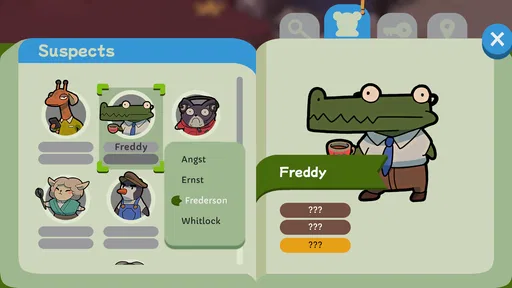
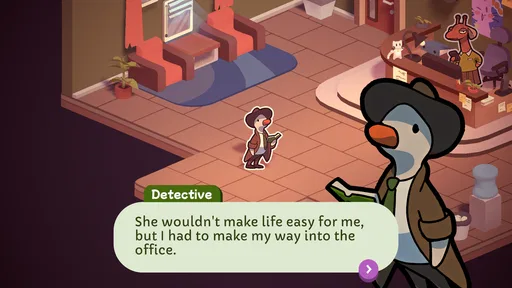
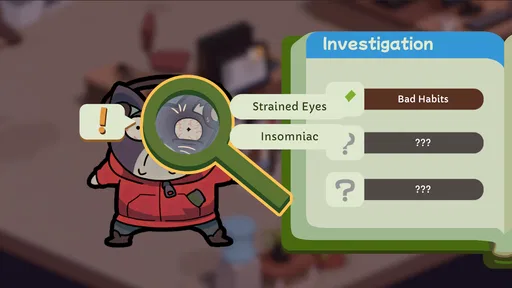
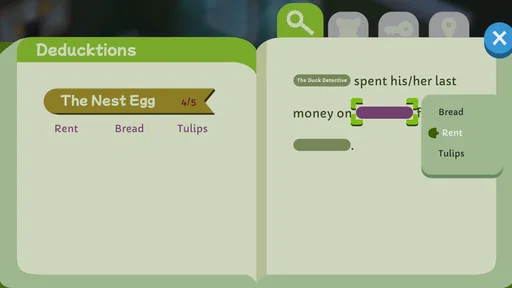
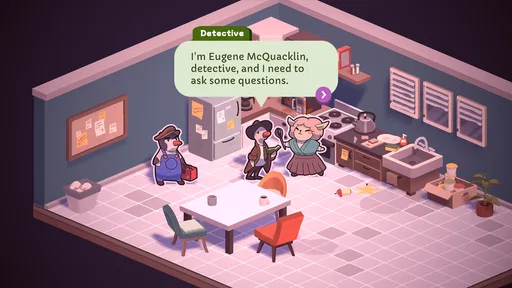
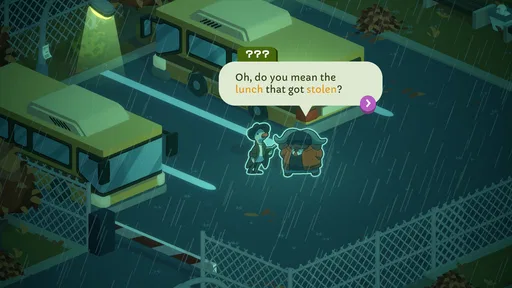
 Analysis by AppCompare
I approached Duck Detective: Secret Salami expecting a light adventure, but what stayed with me was how deliberately it turns a small mystery into a focused investigation. You play Eugene McQuacklin, a down-on-his-luck duck detective, and the appeal comes less from action than from observing people, asking the right questions, and deciding which details deserve attention. It is the kind of game I can recommend to someone who wants a story-led experience without a huge map, a long list of combat systems, or constant pressure to react.
That compact design also shapes its performance. In my experience, a game built around conversations, clues, and carefully presented scenes has a much easier job than a large three-dimensional adventure. The result feels suited to short sessions on a phone or tablet, although the relaxed pace will not satisfy players looking for fast movement or demanding challenges. Snapbreak has published it as a free adventure game for Everyone, with optional purchases priced at $5.99 per item, so it is easy to try before deciding whether the complete experience fits your taste.
How the investigation feels in everyday play
The best way to understand this game is to imagine playing it during an ordinary break. I could start a session while waiting for an appointment, investigate a conversation, solve a small reasoning step, and stop without feeling that I had abandoned a complicated action sequence. Its structure makes it approachable when I want something involving but not exhausting. The mystery gives the session purpose, while the gentle presentation keeps the mood playful rather than tense.
That does not mean the game is empty or automatic. The central pleasure comes from paying attention. Characters may offer information that looks harmless at first, and the challenge is working out how separate observations fit together. I found myself slowing down before choosing an answer, not because the controls were difficult, but because the wording and context mattered. This is an important distinction: the game asks for careful reading instead of quick reflexes.
The duck detective theme gives the investigation a personality that many conventional mystery games lack. Eugene is not presented as a polished, unstoppable professional. His unfortunate circumstances make him more amusing and approachable, and that tone carries through the experience. If you enjoy mysteries that can make you smile while still asking you to think, the combination works particularly well.
Players should also understand what kind of adventure this is before installing it. It is not a substitute for a large exploration game, a role-playing game with character builds, or a hidden-object title designed around endless item hunting. The focus is narrower and more deliberate. I would describe it as an interactive detective story where progress depends on conversation, deduction, and recognizing connections rather than collecting power or mastering complicated controls.
Speed expectations on phones and tablets
From a performance perspective, the modest scope is reassuring. Scenes centered on dialogue and investigation generally place less demand on a device than open environments filled with moving objects, streaming terrain, or real-time combat. In normal use, I would expect the game to feel responsive on a reasonably maintained Android device that meets its minimum requirement, especially when the operating system is not overloaded with background tasks.
Worth Reading Before You Choose

EA SPORTS FC Mobile 26 Is a Bigger Football Game, but It Takes Time

Flipboard Shows What News Apps Must Do Beyond the Feed

Switching to Android Auto Means Rethinking Your Driving Routine

Google Calendar Makes a Crowded Week Easier to Manage

Ludo King Makes the Most of the Minutes Between Plans

Baby Panda World Brings Quick Play to Modern Phones, but Its Game Library Feels Busy
The listed minimum is Android 7.0, which makes the game accessible to a broad range of devices. That does not guarantee identical results on every older phone, because hardware, storage condition, and system maintenance still influence how smoothly any game behaves. Even so, this is a much friendlier starting point than an adventure designed around high-end visual effects. For iPhone and iPad users, the same general expectation applies: the presentation is more likely to be comfortable than demanding.
What I appreciate is that the game’s pace does not fight its subject. A mystery benefits from a moment to read, inspect, and reconsider. There is no need for the software to push rapid transitions simply to appear energetic. When a game is built around deduction, perceived speed is partly about how quickly the interface lets me understand what is happening. Here, a calm rhythm feels appropriate rather than sluggish.
Still, readers who define performance only by instant action may judge it differently. A player used to arcade games could interpret the pauses between decisions as slow, even if the application is running correctly. That is a design trade-off, not necessarily a technical flaw. The game prioritizes clarity and atmosphere over a constant stream of movement, so its speed should be evaluated against other narrative adventures rather than action titles.
What happens during longer or heavier sessions
The moments most likely to feel demanding are not dramatic battles, because this is not built around that kind of activity. Longer sessions are more likely to test your patience than your phone’s graphics hardware. Reading every exchange, revisiting your assumptions, and keeping track of clues can become mentally heavier as the investigation develops. I found that the sensible way to play is in focused stretches, taking a short pause when I noticed myself selecting answers without really considering them.
That approach also helps with battery expectations. I would not choose this game as a guaranteed low-power activity for every device, since screen brightness, wireless activity, battery age, and the phone itself all matter. However, its investigation-led presentation should generally be less demanding than a modern 3D action adventure. On an older handset, closing unrelated applications before playing is a practical step, particularly if the device already struggles when several apps remain open.
Storage and installation habits are worth considering too. A phone with very little free space can behave unpredictably during updates or when switching between applications, regardless of the game’s basic requirements. Keeping some room available and using a stable connection when installing or updating is more useful than assuming every slowdown comes from the game. These are simple precautions, but they make a noticeable difference on budget or aging devices.
One non-obvious strength is that the game’s thoughtful pace makes it easier to recover from interruption. If a message, call, or daily task pulls me away, I am not losing the flow of a timed encounter. I can return, reread the situation, and continue thinking. That makes it a better fit for commuting, waiting rooms, or evenings when I expect to be interrupted than a game that punishes every pause.
Reliability, progress, and recovering from interruptions
Reliability is not only about whether an app opens. For a mystery game, it also means being able to return to the investigation without feeling lost. The conversational format helps because the story supplies context through what characters say and what the player is asked to notice. If I leave for a while, I may need a minute to remember my theory, but the experience is easier to reconstruct than a sprawling adventure with dozens of unrelated objectives.
I would nevertheless recommend treating progress carefully, especially on a phone shared with other people or one that frequently clears applications from memory. Before closing the game after an important discovery, I prefer to give the current interaction time to settle and avoid immediately forcing the app shut. That is not a special feature claim; it is simply a sensible recovery habit for any story game where losing a recent decision would be frustrating.
Another practical point is the difference between restarting the application and restarting the investigation. If the game ever appears slow after a long period of multitasking, my first step would be to return to the home screen, close unnecessary background apps, and reopen it rather than repeatedly tapping through the same screen. On older devices, a full device restart can also help when the wider system is struggling. These small routines are especially relevant for people using the minimum supported Android version.
The free entry point lowers the risk of trying it, but the purchase model deserves a moment of attention. Optional items cost $5.99 each, so I would check the purchase prompt carefully before confirming anything. For a younger player, the Everyone rating makes the tone broadly accessible, but adults should still manage purchasing access on a shared device. The age rating describes the content, not whether every child will enjoy reading-heavy deduction.
With an average rating of 4.6 from around 6,900 ratings, the public response suggests that the central idea connects with many players. I treat that as useful context rather than a promise that every mystery fan will agree. A high rating cannot remove the main personal question: do you enjoy solving through dialogue and observation? If the answer is yes, the game’s focused format is likely to feel purposeful. If you need constant novelty or physical challenge, the same compactness may feel restrictive.
Device limitations and who should choose another game
The Android 7.0 requirement is welcoming, but an operating system number is only part of the picture. A phone with limited memory, an almost-full storage drive, or an aging battery may still deliver a less comfortable experience. I would be cautious about installing it on a device that already reloads ordinary apps whenever I switch away from them. The game may be modest compared with a large action title, yet system health remains important.
Players using older screens should also consider readability. Mystery games depend on following dialogue and noticing small distinctions in wording. If text looks cramped, the display is dim, or the device is uncomfortable to hold for reading, the problem is not solved by faster hardware. A larger phone or tablet can be a better choice for this particular style of play because it makes the investigation easier to follow during longer conversations.
This is also not the right recommendation for someone seeking a competitive daily game. There is no reason to approach it as a leaderboard challenge or a reflex workout. Its reward is the satisfaction of understanding a situation and making a well-supported deduction. Players who prefer the usual adventure formula of exploration, combat, equipment upgrades, and expansive side activities may find a broader game more rewarding.
On the other hand, it is a strong option for people who normally avoid adventure games because they appear complicated. The controls and objectives are easier to grasp than those of a large role-playing game, while the detective framing gives each conversation a reason to matter. It can also work well for friends or family members who like discussing theories together. One person can read the dialogue aloud while another points out suspicious details, turning a solo game into a casual shared puzzle.
A useful trade-off is replay style. The first playthrough is driven by discovery, so the strongest moments come from not knowing which detail matters. Someone who wants endless procedural content may finish and immediately look for a different game. Someone who values a contained story may prefer exactly that sense of completion. I would choose it for a memorable, manageable adventure rather than an application intended to occupy every spare hour indefinitely.
Why the detective format works better than the usual alternatives
Compared with a conventional puzzle game, this adventure gives deductions a social and narrative context. Instead of solving isolated challenges that could be rearranged into any theme, I am trying to understand characters and motives. Compared with a large detective simulation, it is less intimidating and easier to pick up. The compromise is that it does not offer the same breadth, freedom, or elaborate case management that a more complex mystery game might provide.
Compared with action adventures on mobile, its performance demands should be easier to live with, and its control scheme is less likely to be the reason I fail. That makes it suitable for touchscreens where precise movement can feel awkward. The cost is excitement of a different kind: the tension comes from uncertainty and interpretation, not from escaping danger or winning a fight.
One of the more useful ways to play is to separate observation from conclusion. I try to note what a character actually reveals before deciding what it means. That prevents a funny personality or suspicious-looking exchange from pushing me toward an unsupported theory. This habit is valuable beyond the game, and it is also where the experience feels most like detective work rather than a simple sequence of taps.
I also recommend playing with notifications reduced when possible. The game does not require frantic reactions, but interruptions can break the connection between a clue and the conversation that explains it. If I know I have only a few minutes, I focus on one exchange instead of rushing through several. That preserves the humor and makes the investigation feel intentional, while also reducing the chance that I will forget why a particular detail seemed important.
Snapbreak’s version 1.0.61 is the current release, and the game has already passed 500,000 installs. Those figures place it beyond the stage of being an obscure experiment, but they do not change the personal fit question. I would still judge it by the quality of its mystery style, the comfort of reading on my device, and whether its steady rhythm matches the kind of session I want.
My performance verdict after living with the game
My overall impression is that Duck Detective: Secret Salami is a well-targeted mobile adventure rather than a technical showcase. Its perceived speed comes from clean, manageable progression, and its relatively contained presentation should be friendlier to ordinary phones than a visually ambitious action game. The heavier moments are mainly mental: following the case, resisting premature conclusions, and staying attentive to dialogue.
The main limitations are equally clear. If I want rapid movement, deep customization, or a mystery that can be played forever, I would choose another category. The optional purchase price also means I would pay attention during the free experience and decide deliberately before buying anything. And while the Everyone rating makes the game broadly approachable, younger players may still need help with reading and with purchase controls.
For me, the strongest use case is a short, interrupted session on a phone or a more comfortable reading session on a tablet. I can play it after dinner, during a quiet commute, or while waiting somewhere without needing to memorize a complicated control system. The game rewards patience, and its comic detective premise keeps that patience from becoming dry.
My recommendation is simple: try it if you want a compact, character-led mystery that values attention over reflexes. I would skip it only if your idea of adventure requires combat, open-world freedom, or constant high-speed action. For everyone else, Snapbreak has made a free entry point into an unusually personable investigation, and the balance between approachable performance and thoughtful deduction is what makes it worth keeping installed.
Pros
- Charming hand-drawn visuals give every character a memorable personality.
- Clues are easy to track
- making the investigation accessible to casual players.
- The humor stays light and family-friendly throughout the mystery.
- Short chapters make it convenient to play in quick sessions.
- The soundtrack adds a cozy
- playful atmosphere to each location.
Cons
- Limited replay value once you know the culprit and puzzle solutions.
- Some deductions feel obvious after collecting only a few clues.
- The investigation offers little freedom outside the intended sequence.
- Certain jokes may feel repetitive during longer play sessions.
- Touch controls can occasionally feel imprecise on smaller screens.
FAQs for Duck Detective: Secret Salami
What is Duck Detective: Secret Salami about?
Duck Detective: Secret Salami is a humorous mystery adventure in which you play as a down-on-his-luck duck investigating a suspicious case involving a bus full of unusual passengers. You interview characters, inspect clues, identify contradictions, and gradually uncover the truth. The game focuses more on witty dialogue, observation, and deduction than on action or complex puzzles.
Is Duck Detective: Secret Salami suitable for children?
The game has a colorful, cartoon-inspired presentation and a lighthearted tone, making it approachable for many players. However, some jokes, references, and themes are written with older children, teenagers, and adults in mind. Parents should also check the age rating on the relevant app store, since ratings and content descriptions may vary between Android, iOS, and other platforms.
Does Duck Detective: Secret Salami require an internet connection?
The main investigation is designed as a single-player experience and generally does not depend on online multiplayer or constant interaction with other players. An internet connection may still be needed to download the game, verify the purchase, install updates, or access store services. After installation, availability of offline play can depend on the platform and version.
How long does it take to complete Duck Detective: Secret Salami?
Duck Detective: Secret Salami is a relatively compact narrative mystery rather than a large open-world adventure. Completion time depends on how quickly you read dialogue, notice clues, and solve deductions, but most players should expect a short, focused experience that can be finished in a few sessions. It is best suited to players who enjoy polished stories without excessive filler.
Is Duck Detective: Secret Salami free to download?
Whether Duck Detective: Secret Salami is free, paid, or offered through a subscription depends on the store and platform where you obtain it. Before downloading, check the official listing for the current price, supported devices, in-app purchase information, and any subscription requirements. Also confirm that your device meets the listed operating-system and storage requirements for a smooth installation.


